Automation Is Our Only Hope
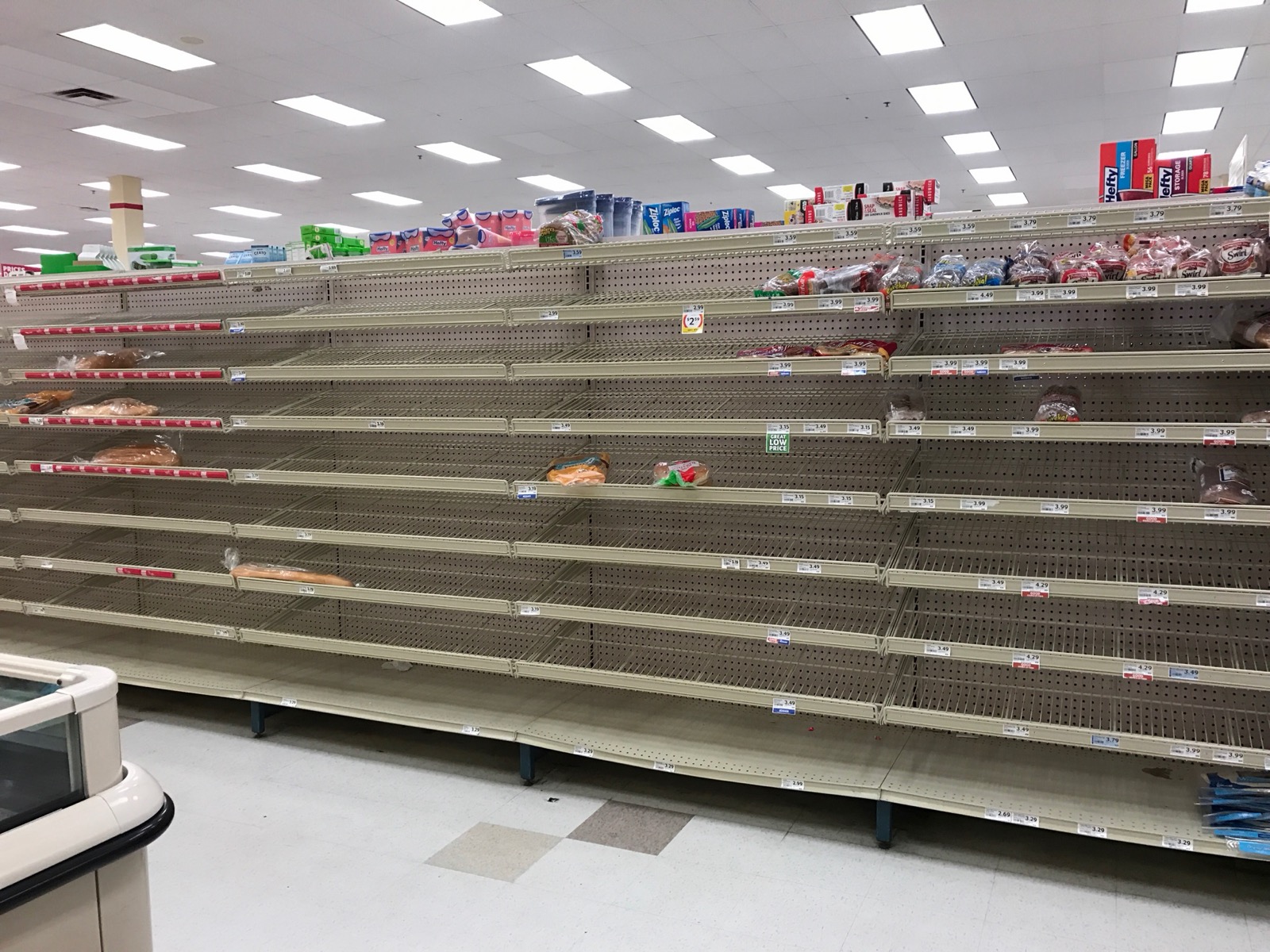
Imagine it's the morning after 700 stores in France had their refrigeration controllers attacked. The problem affects everybody from the CISO to the junior security engineer. Unfortunately, your company runs the same controllers as the stores that were impacted.
Now your CEO is asking: Are we exposed?
For most organizations, finding the answer could take days. Maybe weeks.
I think that automation is our only real chance of getting through the next decade of security vulnerabilities. Reaction times have never been fast enough, and our infrastructure is only getting more complex.
First, you have to figure out who manages these controllers. This type of industrial IoT device is a classic candidate to be managed by a contractor, which, historically, has been a vulnerability all by itself. (The 2013 Target breach began with credentials stolen from its HVAC contractor.1)
Second, this would be easy if we're talking about Windows workstations, but refrigeration controllers may not be on the top of everyone's mind. They're likely to be a rounding error in the big picture of what you have to manage to keep a grocery store chain online. You're worried about external websites, point-of-sale, and PCI leaks.
Third, it's very likely that someone has to log in to each controller and evaluate them one at a time. Maybe you're lucky and there's a centralized management application.
While vulnerability scanning tools can easily reveal standard operating system exposure, it's unlikely these tools will help unless they can authenticate or have a supported plug-in for the platform itself. Active scans can crash fragile OT gear. It would be much better if a comprehensive automation system had already cataloged the exact configuration and knew specifically which software was already installed.
Remediation? That's an entirely different set of challenges that we'll discuss in the context of the French grocery cyberattack.
I'm not suggesting anybody in this workflow is lazy. The process is built around people, and people performing manual tasks will be inherently slow.
Security is a business where your successes are not measured and your failures are scrutinized. There's no doubt that AI tools will help significantly, but they need to be coupled with automated processes driven by human control. AI tools with manual processes are not good enough.
Barriers
Much of the automation that would make us more secure isn't security tooling at all. It's ordinary network and systems automation, and adopting it runs into real obstacles. Not every organization encounters all of these issues in all areas. The gaps are the problem.
Too fragile to touch
One problem is that we build a lot of hardware and software infrastructure with massive fate sharing. The problem is that components of systems can't be touched because, well, they can't go down.
This is a design mistake. The hyperscalers and content companies have shown us how to build technology solutions that can withstand the failure of an entire data center.2, 3
I'm a network architect, so I won't speak for my software counterparts. But I do know that a network can be built so that a security patch can be implemented on an important network device in the middle of the business day without fear. This doesn't hinge on vendor promises for ISSU nirvana, although in-service patching has come a long way in the past 15 years. We can design networks that carefully drain traffic away from infrastructure that needs to be disrupted with a software update. Internet service providers carefully architect multi-vendor networks that limit their risk and exposure to one vendor's defect taking out the entire service. It's not perfect. But the days of being limited to an active and standby architecture are long gone.
Testing is the bottleneck
Even if we had the ability to automate the vulnerability assessment, and the implementation of the mitigation actions, the time it takes to conduct testing is still a big problem.
Many remediation efforts cannot be blindly implemented without testing, but some can, as we'll discuss shortly.
A typical remediation workflow for something that isn't a mainstream operating system goes like this:
- A vulnerability is disclosed.
- The vendor releases a patch or remediation via configuration.
- Someone tests the change, mostly by hand, maybe with a few scripts.
- The change goes out to a small pilot group in production.
- We wait for feedback.
- Everyone else gets the fix.
Some organizations need anywhere from 30 to 90 days to get through that cycle. I've seen organizations that spend so much time testing code that the software itself is nearing obsolescence as it gets deployed. Automation can help shorten the timeframe.
Vulnerability feeds are available electronically from vendors and government sources like CISA KEV and NVD. If not, AI can monitor a shared email box or URL. Real-time vulnerability assessment that's linked to something that takes action is critical.
These feeds should be watched continuously, and AI-assisted applications should have the ability to automatically test mitigations in a controlled sandbox without human direction.
Some legacy applications make this close to impossible. I understand that. It's also a sign that those applications should be retired faster, or walled off with defensive mitigations that are far more aggressive than the baseline for your organization.
Service assurance
Another barrier is having the tooling in place to understand if a particular service is actually working. There's a major distinction between monitoring the binary status of a process running on an operating system versus whether the service is functional and performing well.
Automated synthetic transaction tests are necessary to know whether the service still works after a change.
The refrigerators and freezers
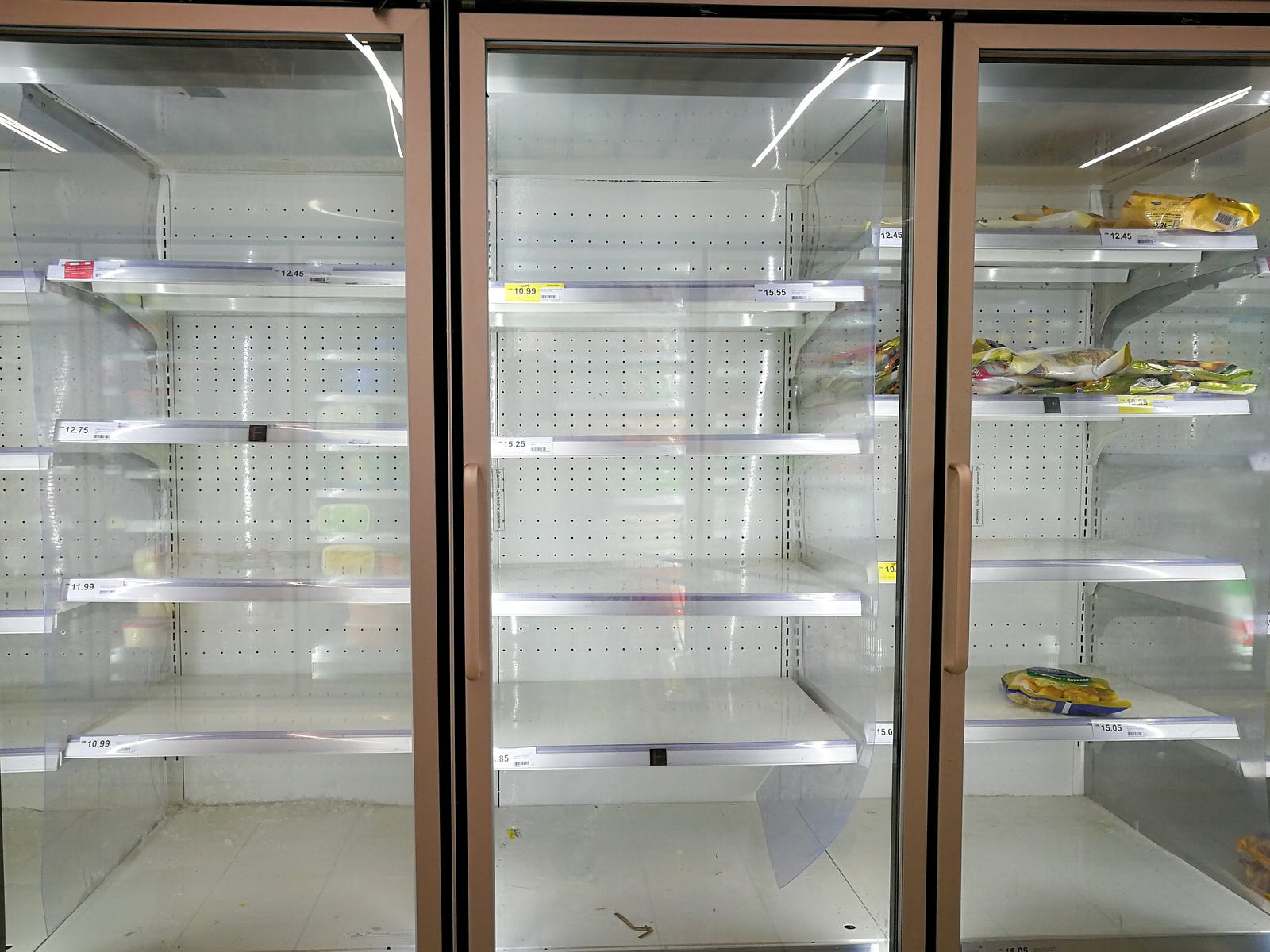
The French grocery store attack is a great example of a one-off system that likely benefits from modern automation. Refrigeration controllers are IoT devices that nobody thinks about until they actually stop working. This is critical infrastructure.4
We need water, food, and shelter to survive. There are a lot of dependencies on IoT devices to support our modern standard of living, especially once you add electricity and medical care to the list. This is why I think the French grocery attack is relevant. In the United States, even a hint of a tropical storm or hurricane that's headed to Florida will wipe a region's grocery stores out of certain products and constrain the supply chain. We don't need an actual disaster to create chaos.
The actual attack
Not all stores within a specific grocery chain were impacted.5 Some units had patches available that were likely never installed,6 and others likely could not be patched due to being considered end-of-support by the manufacturer.7 I have a very strong opinion on this issue, but will cover it separately.
Replacing these controllers is probably expensive, and we can have empathy for the 700 affected stores without the capital to replace them.8 The grocery business is one of the lowest-margin industries in our society.
However, that doesn't mean nothing could have been done to mitigate the risk. There are conflicting reports about what actually happened, but this doesn't change the solution.
Based on when CVE-2025-41450 was published for the Danfoss controllers,9 there were more than 500 days to take action. Keep in mind Copeland controllers were also hit. France's cybersecurity agency, ANSSI, later told the French Senate the attackers didn't need a published vulnerability at all: the equipment was directly exposed to the internet and protected by weak passwords.10
There is a clear argument to be made here that the lack of automation was not the failure. However, automation will help you see the forest for the trees. It's usually the unknown unknowns that create the most difficult problems.
Although not directly tied to the breach, Claroty found 2,765 Danfoss AK-SM 800A controllers reachable from the public internet by searching Censys and Shodan for the StoreView page title.11 This fact astonishes me. I don't typically see organizations put so many IoT devices directly on the internet, reachable, inbound. There's a big distinction between giving these devices outbound internet access versus assigning each of them a public IP address and allowing any source address on the internet to access them.
ANSSI says it was true, and there were several ways to resolve this problem fairly easily. Although it would be better to put these devices behind a remote access VPN that has phishing-resistant and risk-based MFA, the quick fix would have been to apply something as simple as a stateless access control list (ACL). Applied inbound on the store's edge internet router, it would have restricted which source IPs could connect to the controllers.
This is exactly the kind of quick fix that could be applied within minutes, and this change would not need to be tested in advance, if the framework was already built out on the routers.
If it were the morning after the news reports on these attacks, and I managed security for an organization that had 1,000 stores, a new access control entry (ACE) would be added to my pre-staged ACL and pushed before I finished my first cup of coffee. You could spend the rest of the day working out the fallout of which source IP addresses you missed.
The refrigerators would have kept working regardless of the outcome of this change. More importantly, food would not have been wasted. The supply chain would not have been constrained. The public would have had less concern. And fires reported at several stores never would have happened, unless we had a gap in our extranet or remote access architecture.12
100% coverage
The target should be full automation of security-related configuration and software deployment everywhere, for every system. Any part of the infrastructure should be able to take a configuration change that mitigates a vulnerability and, at minimum, push a security software patch automatically, almost immediately.
We don't have to go as far as supporting non-security-related changes or software updates. That's a bigger lift. It will cost more and take more time. This is the area where I think a cost-benefit analysis should be conducted.
Every system that can't meet this bar will have someone arguing for an exception. Some of those arguments will be very reasonable. But the exceptions are where the next breach is most likely to come from, so each one should be treated as a debt with a plan to pay it off.
Keep the bar high.
Where AI fits
If we don't automate, the AI tools have nothing to work with. Yes, a model can recommend a mitigation plan in seconds. But the recommendation goes nowhere if a person still has to log in to hundreds or thousands of controllers.
The relationship works best as a three-way relationship between the humans who drive the tools, the automation systems, and the infrastructure itself, with the humans deciding what's acceptable.
No CVE Needed
The attackers didn't need a zero-day or even a CVE, and Claroty could still find thousands of these controllers on the open internet. Better scanners and smarter models wouldn't have changed that. What would have changed it is boring plumbing: knowing exactly what's installed in every store, and having a way to push one change to all of them at once.
If you're early in your career, this is where I'd spend my time. Learn configuration automation. Learn how your organization keeps track of what it actually has deployed. Use AI to help build a better solution. The next time an advisory lands, the person who can push the fix before the coffee gets cold is the one everyone will want in the room.
Footnotes
- U.S. Senate Committee on Commerce, Science, and Transportation, "A 'Kill Chain' Analysis of the 2013 Target Data Breach," majority staff report, March 26, 2014: https://www.commerce.senate.gov/2014/3/rockefeller-staff-report-details-target-s-missed-opportunities-to-stop-massive-data-breach. See also Brian Krebs, "Email Attack on Vendor Set Up Breach at Target," Krebs on Security, February 12, 2014: https://krebsonsecurity.com/2014/02/email-attack-on-vendor-set-up-breach-at-target/ ↩︎
- Erik Nygren, Ramesh K. Sitaraman, and Jennifer Sun, "The Akamai Network: A Platform for High-Performance Internet Applications," ACM SIGOPS Operating Systems Review 44, no. 3 (2010): https://courses.cs.duke.edu/fall21/compsci514/internal/readings/NygrenSS10.pdf ↩︎
- Rich Miller, "Chaos Kong is Coming: A Look at the Global Cloud and CDN Powering Netflix," Data Center Knowledge, October 17, 2013: https://www.datacenterknowledge.com/cloud/chaos-kong-is-coming-a-look-at-the-global-cloud-and-cdn-powering-netflix ↩︎
- CISA, "Food and Agriculture Sector," one of 16 U.S. critical infrastructure sectors: https://www.cisa.gov/topics/critical-infrastructure-security-and-resilience/critical-infrastructure-sectors/food-and-agriculture-sector ↩︎
- "Hackers Turn French Supermarket Refrigerators Into Furnaces," OCCRP, October 13, 2026. Mousquetaires said 300 of its stores were compromised; Coopérative U said 80 of its nearly 2,000 stores were targeted: https://www.occrp.org/en/news/hackers-turn-french-supermarket-refrigerators-into-furnaces ↩︎
- CVE-2025-41450 affects Danfoss AK-SM 8xxA firmware before R4.2 and is fixed in R4.2. NVD: https://nvd.nist.gov/vuln/detail/CVE-2025-41450. CISA, "Danfoss AK-SM 8xxA Series," ICSA-25-140-03, first published May 20, 2025: https://www.cisa.gov/news-events/ics-advisories/icsa-25-140-03. A separate Danfoss advisory, DSA-2025-08-01 (August 1, 2025), fixed two later vulnerabilities, CVE-2025-41451 and CVE-2025-41452, in firmware 4.3.1: https://www.danfoss.com/en/service-and-support/coordinated-vulnerability-disclosure/danfoss-security-advisories/dsa-2025-08-01/ ↩︎
- "Massive Cyberattack Targets Refrigeration Systems at French Supermarkets," ACHR News, October 16, 2026. Copeland told ACHR News it acknowledged "a discontinued, end-of-life generation of controllers"; citing Reuters, the article reported Danfoss's statement that many affected controllers were past end-of-life and no longer received updates: https://www.achrnews.com/articles/166867-massive-cyberattack-targets-refrigeration-systems-at-french-supermarkets ↩︎
- ACHR News (note 7): about 700 of France's roughly 10,000 supermarkets were affected, according to Economy Minister Roland Lescure. ↩︎
- CVE-2025-41450 affects Danfoss AK-SM 8xxA firmware before R4.2 and is fixed in R4.2. NVD: https://nvd.nist.gov/vuln/detail/CVE-2025-41450. CISA, "Danfoss AK-SM 8xxA Series," ICSA-25-140-03, first published May 20, 2025: https://www.cisa.gov/news-events/ics-advisories/icsa-25-140-03. A separate Danfoss advisory, DSA-2025-08-01 (August 1, 2025), fixed two later vulnerabilities, CVE-2025-41451 and CVE-2025-41452, in firmware 4.3.1: https://www.danfoss.com/en/service-and-support/coordinated-vulnerability-disclosure/danfoss-security-advisories/dsa-2025-08-01/ ↩︎
- Public Sénat, "Des défauts de sécurisation élémentaire et des mots de passe faibles ont permis la cyberattaque contre les frigos de supermarchés," October 21, 2026. ANSSI director Vincent Strubel told the Senate foreign affairs committee the attack exploited basic security failures: refrigeration equipment directly exposed to the internet, administered without particular security, and weak passwords. He dismissed third-party analyses attributing the attack to previously publicized vulnerabilities. Public Sénat dates the attack to the night of October 12 to 13: https://www.publicsenat.fr/actualites/politique/des-defauts-de-securisation-elementaire-et-des-mots-de-passe-faibles-ont-permis-la-cyberattaque-contre-les-frigos-de-supermarches ↩︎
- Claroty Team82, "Freeze the Controller, Defrost the Food: Uncovering Vulnerabilities in Danfoss Refrigeration Controllers," August 2026: https://claroty.com/team82/research/freeze-the-controller-defrost-the-food-uncovering-vulnerabilities-in-danfoss-refrigeration-controllers ↩︎
- Associated Press, via News4JAX, October 13, 2026: the Paris prosecutor's cybercrime unit is investigating damage from spoiled food and "reported fires": https://www.news4jax.com/business/2026/10/13/cyberattack-targeting-refrigeration-systems-hits-700-supermarkets-french-government-says/. Reuters, via The Star, October 12, 2026: temperatures pushed as high as 50°C, "causing fires and spoiling food": https://www.thestar.com.my/tech/tech-news/2026/10/12/french-supermarket-chain-intermarche-hit-by-cyberattack-150-stores-targeted ↩︎
These are personal views, not those of any employer, past or present.